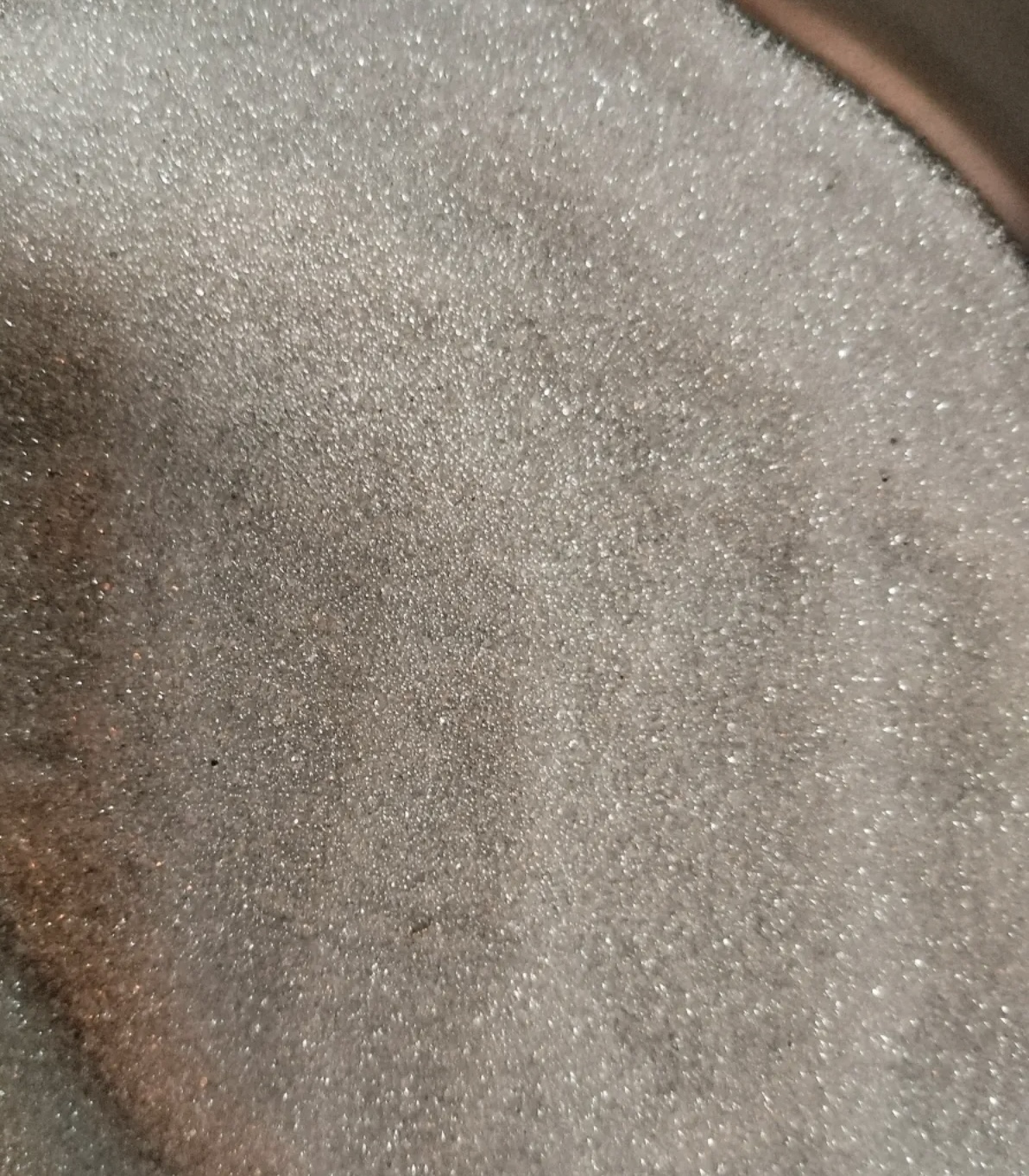
Glass beads for caulking are micron-sized spherical inorganic fillers specially designed for epoxy colored sand sealants. Their main component is borosilicate (primarily SiO₂, combined with oxides of boron, sodium, calcium, etc.). They are produced by high-temperature melting of glass raw materials, followed by atomization and spheroidization, cooling, and sieving classification.
Performance Parameters
1.Appearance & Roundness: Smooth, round and free of impurities, with a roundness rate ≥85% (up to 96% for premium grade).
2.Particle Size & Mesh: Mainstream mesh for caulking: 100–320 mesh (e.g. 200 mesh, 220 mesh). Higher mesh indicates finer particles, suitable for different gap widths and texture requirements.
3.Hardness & Density: Mohs hardness 6–8, wear and scratch resistant; solid density 2.4–2.6 g/cm³, hollow density as low as 0.2–0.4 g/cm³.
4.Chemical Stability: Acid and alkali resistant, heat resistant up to over 600℃, solvent erosion resistant, non-reactive with epoxy/polyurea resins; non-toxic and eco-friendly.
5.Low Oil Absorption: Significantly lower than traditional fillers such as calcium carbonate, reducing resin consumption and cost while maintaining excellent flowability of the sealant.
Core Advantages in Caulking Applications
1.Excellent Workability: Spherical particles offer high flowability, easy mixing and dispersion, smooth extrusion, effortless joint pressing, and simpler residue cleaning.
2.Enhanced Performance: Dense filling reduces curing shrinkage and later cracking; wear-resistant, stain-resistant, waterproof and mildew-proof, extending the service life of caulking.
3. Texture & Aesthetics: Transparent grade enhances glossy fineness; colored grade creates natural sand texture, matching various tile styles.
4. Eco-friendly & Economical: Inorganic composition is non-toxic; low oil absorption saves resin, ensuring controllable overall cost.